

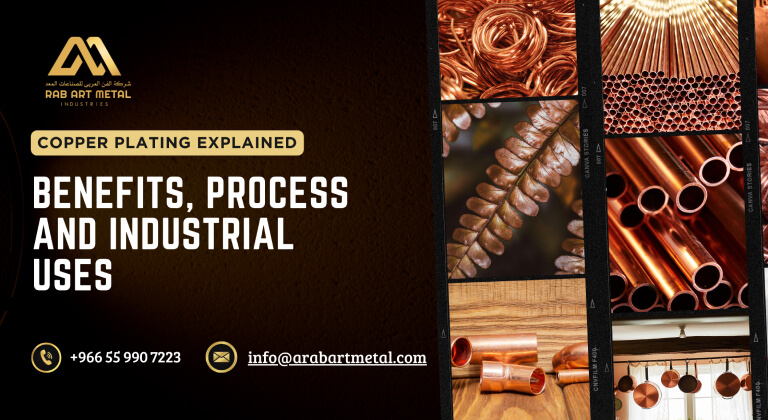
Copper plating is one of the most widely used surface finishing techniques across modern industries. From electronics and automotive components to decorative hardware and industrial machinery, copper coatings play a vital role in improving performance, durability, and appearance. Yet, despite its popularity, many people only have a surface-level understanding of how copper plating works and why it matters.
This guide breaks down copper plating in simple terms, covering its benefits, the process involved, and where it’s commonly used.
What Is Copper Plating?
Copper plating is a process where a thin layer of copper is deposited onto the surface of another material, usually metal, using an electrochemical method. The base material, often steel, brass, or zinc, is submerged in a copper-rich solution and exposed to an electrical current.
As the current flows, copper ions bond to the surface, forming a uniform and tightly adhered coating. This layer can be decorative, functional, or act as a base for additional plating, such as nickel or chrome.
Key Benefits of Copper Plating
It offers a combination of functional and aesthetic advantages, which explains its widespread use.
Excellent Electrical Conductivity
Copper offers exceptional electrical conductivity, making it ideal for efficient current flow. Because of this, copper-plated components are essential in electrical and electronic applications where efficient current flow is critical. The coating ensures reliable conductivity without compromising the strength of the base metal.
Strong Adhesion for Multi-Layer Plating
Copper adheres exceptionally well to most metals and also provides a strong bonding surface for additional coatings. This makes it an ideal intermediate layer in multi-layer plating systems, improving the durability and lifespan of the final finish.
Smooth and Uniform Surface Finish
One of copper’s standout qualities is its ability to level out surface imperfections. It fills micro-cracks and scratches, creating a smooth base that enhances the appearance and performance of subsequent coatings. As a result, final finishes look brighter, cleaner, and more professional.
Improved Corrosion Resistance
While copper alone can oxidise, it acts as a protective barrier when combined with other coatings. It slows corrosion, protects the underlying metal, and improves the overall resistance of plated components in challenging environments.
The Copper Plating Process: Step by Step
Understanding the copper plating process helps readers appreciate why quality control is so important.
Surface Preparation
Everything starts with proper cleaning. The component is thoroughly degreased and treated to remove oils, rust, and contaminants. Any remaining impurities can prevent proper adhesion, so this step is critical.
Acid or Alkaline Activation
Next, the surface is activated using an acid or alkaline solution. This prepares the metal to receive copper ions and ensures uniform deposition during plating.
Electroplating
The prepared component is submerged in a copper plating bath. An electrical current is applied, causing copper ions to migrate and deposit onto the surface. The thickness of the coating is controlled by adjusting time, current, and bath composition.
Rinsing and Finishing
After plating, the part is rinsed to remove residues and may undergo polishing or further plating, depending on the final requirement.
Common Industrial Uses of Copper Plating
Copper plating is used across a wide range of industries due to its versatility.
Electronics and Electrical Components
In electronics, it is essential for printed circuit boards, connectors, and conductors. Its high conductivity ensures efficient signal transmission and reduced energy loss.
Automotive and Engineering Parts
Automotive components benefit from copper plating as a base layer that improves wear resistance and thermal performance. It is often used before nickel or chrome plating in engine parts and fittings.
Decorative and Architectural Applications
It is popular in decorative hardware, lighting fixtures, and architectural elements. It enhances surface smoothness and contributes to a premium final appearance.
Industrial Equipment and Machinery
In heavy industries, copper-plated components are used to improve durability, reduce friction, and enhance corrosion resistance in tools and machine parts.
Why Copper Plating Remains a Smart Choice
It continues to be a preferred surface finishing solution because it balances performance, cost-effectiveness, and versatility. It improves electrical efficiency, strengthens multi-layer coatings, and enhances visual appeal, all while remaining relatively easy to control during production.
For manufacturers and engineers, copper plating is not just a finishing step. Instead, it is a strategic choice that directly impacts product quality, reliability, and longevity.
Whether used on its own or as part of a layered system, copper plating proves that a well-prepared foundation leads to superior results.
For durable, high-performance copper plating in saudi arabia, contact our experts today and take the next step toward better surface finishing.
