

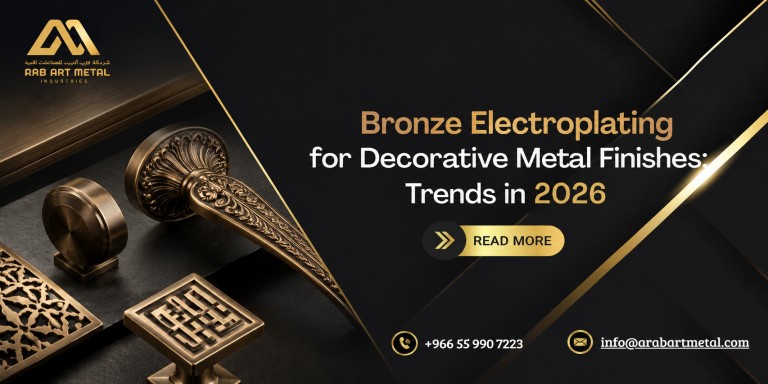
Bronze Electroplating for Decorative Metal Finishes: Trends in 2026
Published: June 12, 2026 • 8 min read • Focus Keyphrase: bronze electroplating
Bronze has carried an air of permanence and prestige for millennia. From ancient statuary to Renaissance door hardware to the warm-toned fixtures of today’s luxury hospitality interiors, it communicates craftsmanship, heritage, and quality. Few other metals match its distinctive brown-gold depth.
In 2026, bronze electroplating decorative metal finishes is experiencing a genuine renaissance. It is no longer simply a nostalgic nod to traditional metalwork. Instead, it is a technically sophisticated, design-forward process. New chemistry, digital process controls, and a design world hungry for warmth and tactility are all driving this shift.
What Is Bronze Electroplating?
Bronze is classically an alloy of copper and tin. However, in electroplating, the term broadly encompasses copper-tin, copper-tin-zinc, and even copper-zinc (brass) deposits. The intended colour and application determine which combination is used.
In electroplating, bronze is co-deposited from a bath containing copper and tin salts. Most commonly, this means copper pyrophosphate or methanesulfonate paired with stannous sulphate or tin methane sulphonate. Precise current density and temperature controls are essential throughout. The ratio of copper to tin governs the deposit colour. Higher tin content pushes the finish toward silver-bronze, while lower tin content produces a warmer, golden-brown tone.
For decorative work, the process is typically followed by mechanical finishing — brushing, burnishing, or polishing. Chemical or electrochemical patination comes next, and finally protective lacquering or PVD top-coating.
If you are approaching electroplating for the first time, our guide on surface preparation for metal plating is essential reading before specifying any bronze finish.
Trend 1: Antique and Aged Bronze Leads the Aesthetic Agenda

The dominant decorative request in 2026 is not bright, polished bronze. Instead, it is aged, antique bronze with deliberate depth and tonal variation. Interior design continues to pivot toward natural materials and warm neutrals. As a result, the aged bronze look has become the default premium hardware specification across hospitality, residential, and retail sectors.
Achieving a convincing antique bronze finish via electroplating involves a layered process:
- Base plate: copper or bronze deposit for colour foundation and levelling
- Patination: chemical oxidation using potassium sulphide, ammonium sulphide, or selenium dioxide solutions to develop dark brown or near-black tonal depth in recesses
- Highlight relief: selective mechanical burnishing or abrasive blasting to reveal bright metal at raised surfaces, creating the light/shadow contrast of genuine age
- Sealing: UV-cure or two-part polyurethane lacquer to lock in the finish and prevent further uncontrolled oxidation
Consequently, the best antique bronze finishes in 2026 are indistinguishable from century-old cast bronze. Furthermore, the market is paying significant premiums for them. For step-by-step process guidance, see our dedicated article on antique bronze patina techniques.
Trend 2: Dark Bronze and Blackened Bronze Finishes
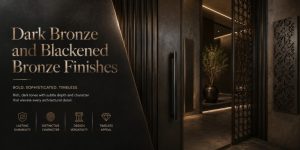
Adjacent to the antique aesthetic — but distinct from it — is the rise of dark bronze and blackened bronze as standalone decorative specifications. Antique bronze celebrates tonal variation and aged relief. Dark bronze, however, is a uniform, deeply saturated finish valued for its contemporary, architectural quality.
Notably, dark bronze is dominating in:
- Architectural metalwork (window frames, curtain wall trims, structural cladding connectors)
- Commercial door hardware (lever handles, hinges, escutcheons)
- Premium audio and home technology enclosures
- Luxury retail fixtures and fittings
The finish is achieved through heavy sulphide patination followed by full-surface sealing. Alternatively, finishers now use electrochemical blackening — a controlled anodic oxidation step. This produces a more uniform, durable dark layer than atmospheric chemical methods.
The appeal is practical as well as aesthetic. Dark bronze conceals fingerprints far better than polished or bright finishes. This makes it a significant advantage in high-traffic commercial environments.
Trend 3: Sustainable Bronze Bath Chemistry

Mirroring the shift already underway in copper plating, sustainable and cyanide-free bronze bath formulations are moving from specialty use to mainstream adoption in 2026. Traditionally, bronze plating on steel substrates relied on cyanide-based copper strike baths for adhesion. This created a significant regulatory and safety liability.
Today, pyrophosphate- and methanesulfonate-based systems provide a credible cyanide-free pathway for most commercial substrates, including:
- Zinc die-cast (the dominant substrate in architectural hardware)
- Steel and iron castings
- ABS plastic with electroless pretreatment
- Copper and brass base metals
Why the New Formulations Matter
Beyond safety compliance, the newer formulations offer clear advantages. First, they deliver improved bath stability over long production runs. Second, they provide more consistent alloy composition across complex part geometries. Third, they are compatible with modern closed-loop effluent treatment systems. Such systems are increasingly mandated in the EU, UK, and North American markets.
Therefore, businesses that have not yet transitioned face growing regulatory and reputational risk. For a broader look at how sustainable chemistry is reshaping the plating industry, our article on eco-friendly electroplating solutions covers the regulatory landscape and chemistry options in depth.
Trend 4: Precision Alloy Control for Colour Consistency
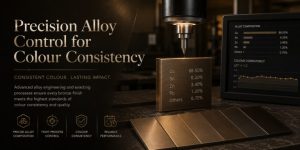
One of the perennial challenges in bronze electroplating is alloy drift. This is the gradual shift in the copper-to-tin ratio as plating proceeds. It produces visible colour variation across a production run. For instance, door handles plated at the start of a week can look noticeably different from those plated at the end.
In 2026, in-line alloy monitoring systems using X-ray fluorescence (XRF) and UV-Vis spectrophotometry are now accessible to mid-volume decorative plating operations. These systems:
- Continuously sample bath chemistry and measure copper and tin ion concentrations
- Automatically trigger replenishment dosing to maintain the target alloy ratio
- Log process data for quality traceability — increasingly required by luxury goods brands and architectural clients
Moreover, AI-driven predictive models trained on bath history help maintain tolerances previously achievable only on small, manually tended baths. As a result, decorative bronze platers can now hold production-scale colour consistency. This is a competitive differentiator that commands premium contract pricing.
Trend 5: Bronze Plating on 3D-Printed and Composite Substrates

Following the path established in copper electroplating, bronze finishing of 3D-printed polymer and composite parts is rapidly maturing into a commercially viable process in 2026. The driver is straightforward: designers want the aesthetic of solid bronze casting without the cost and constraints of traditional methods.
The process chain is well established: electroless copper strike over conductive primer → copper build-up → bronze alloy topcoat → patination and lacquering. This now delivers adhesion and finish quality that meets luxury goods and architectural standards on SLA, SLS, and PolyJet printed substrates.
Notable 2026 applications include:
- Bespoke hotel door furniture with organic, biomorphic forms impossible to cast conventionally
- Limited-edition decorative objects for the interior design market
- Custom retail display fixtures requiring a bronze aesthetic at low unit volumes
- Architectural detail elements (capitals, corbels, grille inserts) produced digitally and finished in bronze
Ultimately, the ability to iterate form in CAD, print overnight, and achieve a museum-quality bronze finish within days is changing the economics of bespoke decorative metalwork.
Trend 6: Two-Tone and Selective Bronze Finishes

Driven by demand for visual complexity and premium differentiation, selective and two-tone bronze finishes are a significant trend in 2026. These combine bronze with contrasting metals such as polished nickel, satin brass, or matte black. Both decorative hardware and jewellery sectors are embracing this approach.
Techniques enabling selective bronze deposition include:
- UV-curable resist masking: precise areas are masked before plating, then the resist is stripped to reveal the contrasting substrate or underlying plate
- Brush plating: handheld tools apply bronze locally to defined areas of a part already plated in another metal
- Laser activation: selective laser ablation activates specific areas for electroless deposition before electrolytic bronze build-up
In particular, the jewellery sector is highly active in this space. Combining selective antique bronze with rose gold or rhodium on the same piece produces richly layered aesthetics. These command significant retail premiums.
Practical Specification Guide: Bronze Electroplating in 2026
Use this table when briefing a plating supplier or writing a finish specification:
| Specification Area | What to Specify |
|---|---|
| Bath chemistry | Cyanide-free preferred; specify pyrophosphate or methanesulfonate system |
| Alloy composition | Cu:Sn ratio — typically 85:15 to 90:10 for warm antique bronze; 70:30 for silver-bronze |
| Deposit thickness | 10–20 µm for decorative topcoat; 5–10 µm over copper intermediate layer |
| Surface finish | Specify Ra value — Ra < 0.4 µm for burnished; Ra 0.8–1.6 µm for brushed/matte |
| Patination type | Specify finish type with physical reference panel or CIE Lab colour coordinates |
| Colour tolerance | ΔE < 1.5 for tight specification; ΔE < 3.0 for standard decorative work |
| Lacquer/sealer | UV-cure clear for indoor; two-part PU or PVD clear for exterior/high-touch |
| Substrate | State material — zinc die-cast, steel, plastic — as this drives bath and strike selection |
Bronze vs. Copper Electroplating: Which Is Right for Your Project?
The choice between bronze and copper as a decorative finish often comes down to three factors:
- Colour temperature. Copper is warmer and redder. Bronze, on the other hand, reads as a more neutral brown-gold. It also ages more gracefully under patination. For heritage and traditional aesthetics, bronze almost always reads as more authentic.
- Durability. Bronze deposits — particularly higher-tin alloys — are harder and more corrosion-resistant than pure copper. Therefore, for functional hardware exposed to handling and moisture, bronze outperforms copper without a topcoat.
- Design intent. For contemporary interiors where the reddish warmth of copper is the design statement, copper wins. However, for heritage, classical, or artisan aesthetics — antique, aged, and organic — bronze is the natural choice.
Frequently Asked Questions
Q1: How durable is bronze electroplating for door hardware?
A 15–20 µm bronze coating over a copper base layer, sealed with two-part PU lacquer, performs well in residential and light commercial applications. For high-traffic commercial environments, specify PVD clear topcoat for maximum durability.
Q2: Can bronze electroplating be applied over aluminium?
Yes, but aluminium requires a zincate pre-treatment step first. This ensures adhesion before the bronze strike. It is a well-established process in the hardware industry.
Q3: What’s the difference between bronze plating and brass plating?
Both are copper alloy deposits. Bronze contains copper and tin, whereas brass contains copper and zinc. Bronze reads as warmer and browner. Brass, by contrast, reads as more yellow-gold. For antique and heritage aesthetics, bronze is generally preferred.
Q4: Does bronze electroplating contain lead?
Modern decorative bronze plating baths are lead-free. Legacy tin-copper-lead alloy systems have been replaced by compliant formulations across all regulated markets.
Q5: How long does bronze electroplating last outdoors?
Unsealed bronze plate weathers and oxidises in exterior environments. Therefore, for outdoor use, specify a 20 µm bronze coating with a fluoropolymer or epoxy topcoat rated for exterior exposure.
