
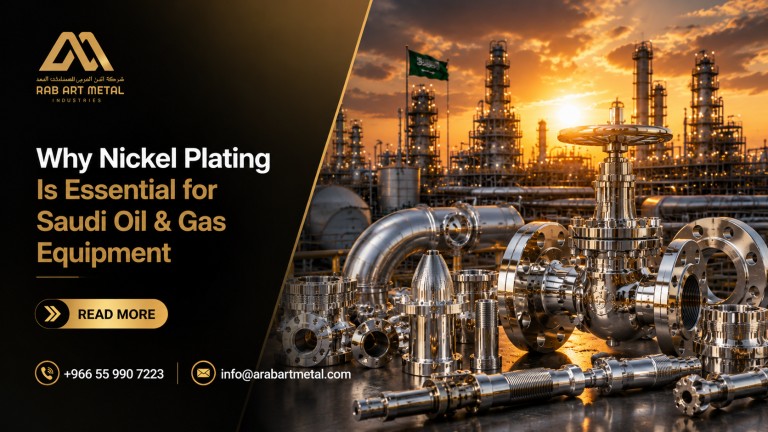
Why Nickel Plating Is Essential for Saudi Oil & Gas Equipment
Saudi Arabia’s oil and gas sector runs equipment through some of the toughest conditions on the planet. Pipelines and pumps face scorching desert heat that regularly tops 50°C. On top of that, abrasive sandstorms scour exposed metal, and saline groundwater works its way into formations and processing facilities. Furthermore, many of the Kingdom’s most productive fields produce sour gas rich in hydrogen sulfide. As a result, corrosion accelerates far faster than equipment in milder climates ever experiences.
For operators and contractors across the Eastern Province, the Arabian Gulf coast, and inland desert sites, protecting metal components isn’t optional. In fact, it’s the difference between equipment that lasts decades and equipment that fails within months. Consequently, nickel plating has become one of the most trusted surface treatments for this challenge. Understanding why it matters helps engineers, procurement teams, and facility managers make smarter asset protection decisions.
The Harsh Operating Environment Saudi Oil & Gas Equipment Must Survive
Few industries test materials as severely as oil and gas extraction in Saudi Arabia. Produced water from many reservoirs carries high concentrations of dissolved salts and chlorides. These conditions attack unprotected steel almost on contact. Moreover, sour fields containing hydrogen sulfide introduce additional corrosion mechanisms. These can compromise critical components such as valves, fittings, and downhole tools.
In addition, Saudi Arabia’s extreme thermal swings push surface equipment from cool desert nights to scorching daytime highs. Meanwhile, wind-driven sand wears away unprotected surfaces over time. Offshore platforms along the Arabian Gulf and Red Sea face a parallel threat from humid, salt-laden air. Equipment that isn’t properly protected deteriorates quickly. This, in turn, drives up replacement costs and increases the risk of unplanned shutdowns.
What Is Nickel Plating?
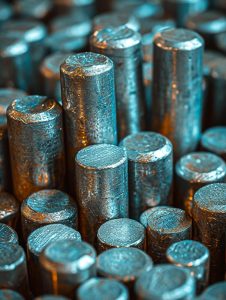
Nickel plating is a surface finishing process. It deposits a thin, adherent layer of nickel onto a metal substrate, most commonly steel, brass, or copper alloys. Two main approaches are used in industrial settings. First, electrolytic nickel plating passes an electric current through a plating bath. This draws nickel ions onto the part’s surface. Second, electroless nickel plating relies on an autocatalytic chemical reaction rather than electricity. As a result, it deposits an even coating across complex shapes, recesses, and internal bores that electric current struggles to reach uniformly.
Electroless coatings also incorporate phosphorus into the nickel layer. Adjusting the phosphorus content — low, medium, or high — lets platers fine-tune the balance between hardness, wear resistance, and corrosion protection. Both processes produce a dense, metallic barrier that shields the base metal from moisture, chemicals, and abrasion. Additionally, they give the part a smooth, professional finish.
Why Nickel Plating Is Essential for Oil & Gas Equipment in Saudi Arabia
The properties of nickel coatings line up closely with what Saudi oil and gas operations demand. Here is what makes the treatment essential rather than optional.
1. Outstanding Corrosion Resistance Against Sour Gas and Saline Water
Nickel forms a dense, low-porosity barrier. This keeps moisture, chlorides, and sulfur compounds away from the base metal. This is particularly valuable in sour service environments. For this reason, electroless nickel coatings are widely used on valves, pumps, and drilling tools. They slow the chemical attack that untreated steel suffers almost immediately.
2. Uniform, Pore-Free Coverage on Complex Components
Many oil and gas parts have intricate internal geometries. Valve bodies, pump housings, and threaded connectors are difficult to coat evenly with conventional methods. However, electroless nickel plating doesn’t rely on electrical current. Therefore, it deposits a consistent thickness across every surface, including counter-bores, internal threads, and tight tolerances. This leaves no exposed gaps for corrosion to take hold.
3. Increased Hardness and Wear Resistance
Beyond corrosion protection, nickel coatings significantly increase surface hardness. Some heat-treated electroless nickel finishes reach Vickers hardness levels well above untreated steel. As a result, abrasive wear from sand, grit, and high-velocity fluid flow is greatly reduced. This extends the working life of moving parts such as hydraulic cylinders, pistons, and valve seats.
4. Reliable Performance Across Extreme Desert Temperatures
Nickel coatings hold onto their protective properties across wide temperature swings. This is typical of Saudi desert and coastal sites. Whether equipment sits under direct summer sun or operates through cooler winter nights, the coating retains its corrosion resistance throughout.
5. Reduced Downtime and Maintenance Costs
Every hour a production line or drilling rig is offline for unplanned repairs carries a real cost. Fortunately, nickel plating slows both corrosion and wear. As a result, parts need replacing less often, and unscheduled maintenance becomes less frequent. This helps operators keep equipment in service for longer stretches between inspections.
6. Extended Service Life and Lower Lifecycle Costs
Nickel plating adds an upfront cost to component manufacturing or refurbishment. However, it typically pays for itself by extending the usable life of the part. For operators managing large inventories across multiple sites, that translates into fewer replacement purchases. Ultimately, total cost of ownership drops significantly over the equipment’s lifetime.
Where Nickel Plating Is Used Across Saudi Oil & Gas Operations
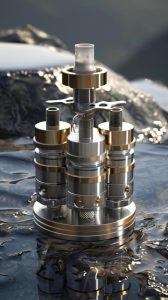
Nickel coatings show up across nearly every stage of upstream, midstream, and downstream operations, including:
- Valves, actuators, and flow control components exposed to hydrocarbons and produced water
- Pumps, seals, and hydraulic cylinders subject to constant friction and pressure
- Drilling tools and downhole hardware operating in sour, high-salinity formations
- Pipeline flanges, fittings, and threaded connectors at risk of leak-path corrosion
- Offshore platform hardware exposed to humid, salt-laden marine air
- Safety and control instrumentation, including sensors and gauges, that must stay reliable in harsh conditions
- Fasteners, brackets, and structural hardware throughout processing facilities
Electroless vs. Electrolytic Nickel Plating: Choosing the Right Process
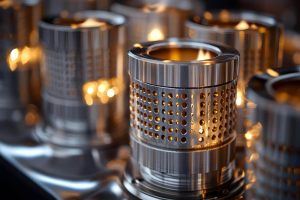
Both nickel plating methods have a place in oil and gas applications. The right choice depends on the part’s shape, service environment, and performance requirements.
| Factor | Electroless Nickel | Electrolytic Nickel |
| Coating uniformity | Excellent on complex shapes; no electrical “hot spots” | Can vary on intricate or recessed geometries |
| Hardness range | Adjustable via phosphorus content; can exceed 1,000 HV after heat treatment | Generally lower hardness as-deposited |
| Best suited for | Valves, pumps, downhole tools, parts with internal bores | Larger parts with simpler geometries; decorative and functional finishes |
| Typical Saudi oil & gas use | Sour-service components, precision parts | Structural hardware, fittings |
An experienced plating partner will assess the part’s geometry and service environment first. They will then recommend the right process. In some cases, they may combine techniques for parts that need both heavy-duty protection and a refined finish.
Aligning With Saudi Industry Standards
Saudi Arabia’s oil and gas sector operates under some of the most demanding engineering standards in the world. Equipment for sour-gas service must often meet NACE MR0175 / ISO 15156. These standards govern materials used in hydrogen sulfide environments. Broader quality frameworks like ISO 9001 also apply. When evaluating a nickel plating partner, it’s worth confirming their process controls and quality documentation. Additionally, check their experience with the specific alloys and phosphorus grades that meet these requirements. The right specification can mean the difference between a coating that performs for years and one that fails prematurely.
Why Choose Arab Art Metal Coating for Nickel Plating in Saudi Arabia
Based in Riyadh, Arab Art Metal Coating Company brings together advanced plating technology and hands-on craftsmanship. Every project is assessed individually. The team selects the plating method, alloy composition, and finish — bright polished, satin, matte, or brushed — that best matches the part’s function and operating environment. Rather than applying a one-size-fits-all process, they tailor every coating to the job.
Furthermore, the company offers transparent turnaround times and a strong track record across industrial, automotive, and architectural metal finishing. As a result, Arab Art Metal Coating is well positioned to support oil and gas operators, fabricators, and equipment suppliers across Saudi Arabia who need coatings that hold up under real operating conditions.
Final Thoughts
Saudi Arabia’s oil and gas equipment faces an environment that gives corrosion and wear every advantage. High salinity, sour gas, intense heat, and abrasive sand all attack unprotected metal. Nickel plating directly counters each of those threats. It delivers a dense, uniform, and durable barrier that keeps critical components running longer and more reliably.
For operators and fabricators looking to reduce maintenance costs and extend asset life, partnering with an experienced metal finishing provider is one of the most cost-effective decisions available. If you’re evaluating nickel plating for your next oil and gas project, reach out to Arab Art Metal Coating Company in Riyadh for a tailored consultation.
Frequently Asked Questions
1. Why is nickel plating important for oil and gas equipment in Saudi Arabia?
Saudi oil and gas equipment faces high salinity, sour gas, extreme heat, and abrasive sand. All of these accelerate corrosion and wear on untreated metal. Nickel plating creates a dense protective barrier that resists these conditions. As a result, components last longer and perform more reliably.
2. Which oil and gas components benefit most from nickel plating?
Valves, pumps, hydraulic cylinders, drilling tools, pipeline fittings, and safety instrumentation see the greatest benefit. These parts are constantly exposed to hydrocarbons, produced water, and mechanical wear.
3. What is the difference between electroless and electrolytic nickel plating?
Electroless nickel plating uses a chemical reaction instead of electric current. This produces a uniform coating even on complex shapes and internal surfaces. Electrolytic nickel plating, on the other hand, uses an electric current and tends to suit larger parts with simpler geometries.
4. How does nickel plating perform in Saudi Arabia’s climate?
Nickel coatings maintain their corrosion resistance and hardness across wide temperature swings and high humidity. These conditions are found in both desert and coastal regions of Saudi Arabia. As a result, nickel-plated equipment performs reliably year-round.
5. How long does nickel plating last on industrial equipment?
Service life depends on coating thickness, phosphorus content, and the operating environment. However, properly applied nickel plating can extend a component’s usable life significantly. In many cases, it adds years rather than months compared to uncoated metal.
6. How can I get a nickel plating quote for my oil and gas project in Saudi Arabia?
You can contact Arab Art Metal Coating Company directly through their website or by phone. Their team will review your component specifications and operating conditions. They will then recommend the right plating process and finish for your needs.
