
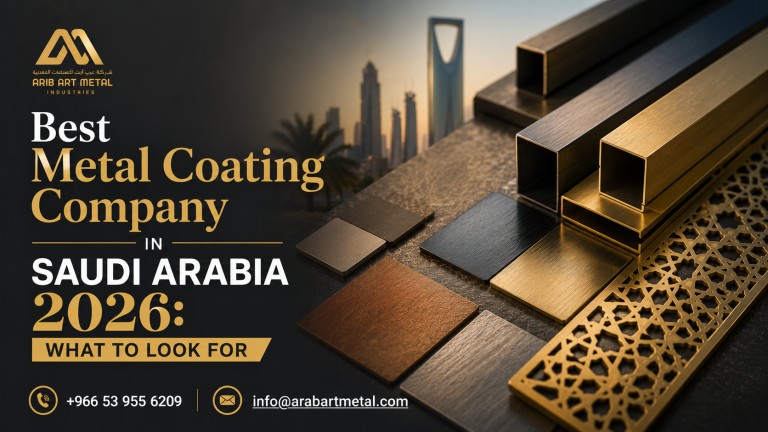
Best Metal Coating Company in Saudi Arabia 2026: What to Look For
Published: June 8, 2026 • 9 min read • Focus Keyphrase: best metal coating company in Saudi Arabia
Introduction
Saudi Arabia’s industrial sector is booming. From Vision 2030 mega-projects and NEOM to oil & gas infrastructure, construction, and automotive manufacturing, demand for high-performance metal coating has never been higher. But with dozens of providers across Riyadh, Jeddah, Dammam, and the Eastern Province, finding the best metal coating company in Saudi Arabia can feel overwhelming.
This guide cuts through the noise. Whether you need powder coating, epoxy coating, thermal spray, or specialised anti-corrosion treatments, here is exactly what to evaluate before signing a contract.
| Table of Contents
1. Why Metal Coating Matters in Saudi Arabia’s Climate 2. Key Types of Metal Coating Services to Know 3. What to Look for in a Top Metal Coating Company 4. Certifications & Compliance Standards (KSA-Specific) 5. Coating Types Comparison Table 6. Red Flags to Avoid 7. Frequently Asked Questions |
1. Why Metal Coating Matters in Saudi Arabia’s Climate
Saudi Arabia presents one of the most demanding environments for exposed metalwork on earth. Temperatures routinely exceed 45°C in summer, UV radiation is extreme, humidity along coastal areas like Jeddah and Dammam accelerates corrosion, and sandstorms add abrasion to the equation. Without proper coating, industrial metal structures can degrade in as little as two to three years.
| 📌 | Did you know? Corrosion costs Saudi Arabia an estimated SAR 25–30 billion annually across industrial and infrastructure assets. High-quality metal coating is the single most cost-effective preventive measure available. |
For industries such as oil & gas, water treatment, construction, and power generation, coating failures translate directly into unplanned shutdowns, regulatory non-compliance, and significant replacement costs. This is why choosing the right coating partner matters — not just for the upfront price, but for the total cost of ownership over a 10–20 year asset life.
2. Key Types of Metal Coating Services to Know
Not all coatings are equal, and the best companies offer a range of solutions matched to specific industrial conditions.
Powder Coating
The most common finish for structural steel, gates, railings, and architectural metalwork. Electrostatically applied dry powder is cured in a high-temperature oven, producing a hard, durable surface. Look for UV-stabilised polyester formulations for outdoor KSA applications.
Epoxy Coating
Ideal for pipelines, tanks, and flooring exposed to chemicals, water, or petroleum products. Two-component epoxy systems offer excellent adhesion and chemical resistance. Top companies in KSA apply these to both new assets and rehabilitation projects.
Thermal Spray Coating (TSC)
Used in oil & gas, power generation, and heavy industry. Metals like zinc, aluminium, or speciality alloys are sprayed in molten form onto the substrate, providing superior corrosion and wear protection. Zinc Thermal Spray (ZnTS) is commonly specified for offshore and coastal structures.
Galvanising (Hot-Dip & Electro)
Hot-dip galvanising offers long-term zinc-based corrosion protection for structural steel and is widely used across KSA for transmission towers, guard rails, and industrial frameworks.
Intumescent (Fireproofing) Coatings
Required under the Saudi Building Code and SABIC/Aramco fire safety standards for structural steel. These coatings expand under heat to insulate the steel and maintain structural integrity in a fire scenario.
3. What to Look for in a Top Metal Coating Company
Technical Capability & Equipment
The best metal coating company in Saudi Arabia will operate modern, well-maintained facilities, including blast rooms with SA 2.5 or SA 3 surface preparation capability, temperature-controlled spray booths, and proper curing ovens. Visit the facility if possible — or ask for photos and third-party inspection reports.
Surface Preparation Standards
Any coating expert will tell you: a coating is only as good as the surface beneath it. Ask specifically about surface preparation standards. ISO 8501-1 (Swedish Standards Sa 2.5 or Sa 3) is the benchmark for blast cleaning. Companies that skip or shortcut surface prep will produce coatings that fail prematurely regardless of product quality.
In-House Quality Control
Top companies maintain in-house QC labs for dry film thickness (DFT) measurement, holiday testing, adhesion testing, and hardness checks. Ask for a sample Quality Control Plan (QCP) and Inspection Test Plan (ITP) before signing any contract.
Checklist: What a Top Company Should Offer
- ✓ Modern blast rooms (Sa 2.5 / Sa 3 capability)
- ✓ Temperature & humidity-controlled spray environment
- ✓ In-house QC lab with DFT gauges, holiday detectors & adhesion testers
- ✓ Documented ITP (Inspection & Test Plan) process
- ✓ Aramco / SABIC / SEC approved vendor registration
- ✓ Certified applicators (NACE/AMPP Level 2 or CIP)
- ✓ On-site coating capability for large or immovable structures
- ✓ Material traceability & batch documentation
4. Certifications & Compliance Standards (KSA-Specific)
In Saudi Arabia, regulatory compliance and client-mandated certifications are not optional for serious industrial work. Here is what to look for:
| ⚠️ | Important: Do not simply accept a company’s claim of certification. Always ask for a copy of the certificate with a current validity date and verify the registration number directly with the issuing body. |
ISO 9001:2015 — Quality Management
The foundation. Any reputable metal coating company should hold this. It ensures they have documented processes, internal audits, and continual improvement systems in place.
ISO 14001:2015 — Environmental Management
Critical for companies handling solvent-based paints, heavy metals, and blasting media. Required by most large client HSE departments and increasingly by KSA regulatory authorities.
SASO Compliance
The Saudi Standards, Metrology and Quality Organisation (SASO) sets product and process standards applicable in the Kingdom. Coating materials used should comply with applicable SASO specifications and the Saudi Building Code where relevant.
NACE/AMPP Certification
The National Association of Corrosion Engineers (now AMPP) offers the globally recognised CIP (Coating Inspector Program). Aramco, SABIC, and most major EPCs require at a minimum NACE CIP Level 2 inspectors on-site during application. Ask the company how many certified inspectors they employ.
Aramco Approved Vendor (SAP)
If your project involves Saudi Aramco assets, the coating contractor must be registered in Aramco’s Supplier Qualification System. This is non-negotiable and involves a thorough technical and financial prequalification process.
5. Coating Types Comparison at a Glance
| Coating Type | Best For | Temp Resistance | Corrosion Protection | UV Resistance | Lifespan (KSA) |
| Powder Coating | Architectural, structural | Up to 200°C | Moderate | High (UV-grade) | 10–15 years |
| Epoxy (2-part) | Pipelines, tanks, floors | Up to 120°C | High | Low | 8–12 years |
| Thermal Spray Zinc | Offshore, coastal, bridges | Up to 400°C | Very High | Moderate | 20–30 years |
| Hot-Dip Galvanizing | Structural steel, towers | Up to 250°C | Very High | High | 25–50 years |
| Intumescent | Structural fire protection | Expands 150°C+ | Low (needs topcoat) | Moderate | 15–20 years |
| Polyurethane (PU) | Topcoats, UV-exposed areas | Up to 150°C | Moderate | Very High | 10–15 years |
6. Red Flags to Avoid When Choosing a Coating Company
Unfortunately, the KSA market includes providers who undercut on price by cutting corners on process, materials, or documentation. Here are warning signs that should give you pause:
- ✓ No ISO 9001 certification — or an expired certificate
- ✓ Inability to provide a written Inspection Test Plan (ITP)
- ✓ Vague or unspecified surface preparation standards
- ✓ No third-party inspection option — or resistance to client witness points
- ✓ Using generic or unbranded coating products without material data sheets
- ✓ No NACE/AMPP-certified inspectors on staff
- ✓ Extremely low pricing that cannot be justified by scope reduction
- ✓ No track record or referenceable projects of similar scale
7. Frequently Asked Questions
Q1: What is the best metal coating method for extreme heat in Saudi Arabia?
A: Ceramic thermal spray coatings and high-temperature epoxy systems perform best in Saudi Arabia’s extreme summer conditions, offering protection up to 600°C while resisting UV degradation and oxidation. For structural steel not subject to extreme heat, hot-dip galvanising with a polyurethane topcoat is an excellent long-term solution.
Q2: What certifications should a metal coating company in Saudi Arabia have?
A: At minimum, look for ISO 9001:2015 (quality management), ISO 14001:2015 (environmental management), SASO compliance, and NACE/AMPP CIP certification for corrosion work. For oil & gas or petrochemical projects, Aramco or SABIC-approved vendor status is typically mandatory.
Q3: How much does industrial metal coating cost in Saudi Arabia?
A: Pricing varies based on coating type, substrate condition, project scale, and site access. Powder coating ranges from SAR 15–50 per sq/m; industrial epoxy systems from SAR 50–120 per sq/m; thermal spray zinc from SAR 150–400 per sq/m. Always request a fully itemised proposal to enable proper comparison.
Q4: Is powder coating suitable for outdoor use in Saudi Arabia?
A: Yes, but only if the powder formulation includes UV stabilisers (outdoor-grade polyester or PVDF) and is applied over a zinc-rich primer. Standard indoor-grade powder coating without UV stabilisation will chalk, fade, and crack within two to three years in KSA’s intense UV environment.
Q5: What is the difference between painting and industrial coating?
A: Decorative painting uses single-component paints applied for aesthetics with limited protective life. Industrial coating involves a multi-layer system (primer, intermediate, topcoat) engineered for a specific service environment, with documented surface preparation, DFT measurements, and inspection records. A properly specified industrial coating system can last 20+ years.
