
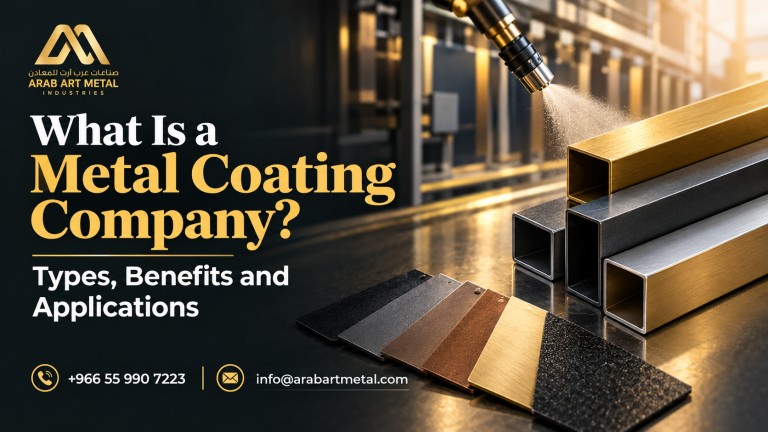
What Is a Metal Coating Company? Types, Benefits and Applications
Updated September 2026 · 10 min read · arabartmetal.com
Every piece of metal starts losing a slow fight the day it leaves the workshop. Heat, humidity, salt air, fingerprints and daily wear all attack the surface. A metal coating company exists to win that fight. It applies a controlled layer of another material onto a metal part so that the part lasts longer, looks better, or performs a specific job, such as conducting electricity or resisting chemicals.
In Saudi Arabia and the wider Gulf, that job is harder than most places. Summer heat, sand abrasion and coastal humidity push untreated steel, brass and aluminium to corrode and discolour quickly. This guide explains what a metal coating company actually does, the main coating types, the benefits you can expect, and where each finish is used, from industrial plant to gold-plated interiors and trophies.
What Is a Metal Coating Company?
A metal coating company is a specialist that prepares metal surfaces and applies protective or decorative layers to them. The layer might be another metal, such as gold, nickel or zinc. It might be a polymer, such as powder coat or epoxy. It might be an engineered film, such as an anodized oxide or a PVD ceramic.
The coating itself is only part of the work. A good provider also handles:
- Surface preparation: degreasing, pickling, blasting or polishing so the coating bonds properly.
- Process selection: matching the coating to the base metal, the environment and the look you want.
- Application: plating tanks, spray booths, curing ovens or vacuum chambers, run under controlled conditions.
- Quality control: thickness checks, adhesion tests and visual inspection before anything ships.
- Finishing touches: brushing, mirror polishing, antiquing or lacquering to lock in the final appearance.
At Arab Art Metal, for example, that workflow covers everything from electroplating services for decorative pieces to heavy-duty industrial metal coating for components that live outdoors.
Why Metal Coating Matters: The Cost of Doing Nothing
Corrosion is expensive. The NACE IMPACT study, published by the body now known as AMPP, estimated the global cost of corrosion at about US$2.5 trillion a year, roughly 3.4% of world GDP. The same study found that using corrosion control practices already available could cut that cost by 15–35%.
Metal coatings are one of the most direct of those controls. A correctly specified coating costs a fraction of replacing a rusted railing, a pitted fitting or a tarnished feature wall. In short, coating is cheaper than replacement.
Main Types of Metal Coating
No single finish suits every job. These are the processes a full-service metal coating company typically offers.
1. Electroplating
Electroplating uses an electric current in a chemical bath to deposit a thin, even layer of one metal onto another. It gives a true metallic look and adds corrosion and wear resistance.
- Gold electroplating: luxury interiors, fixtures, awards and gifts.
- Silver electroplating: tableware, decorative items and electrical contacts.
- Copper electroplating: conductivity, and as an undercoat for other layers.
- Nickel electroplating: hard, bright, corrosion-resistant base or top coat.
- Bronze electroplating: warm, classic tones for architecture and décor.
2. Hot-Dip Galvanizing
Steel is dipped in molten zinc, forming a thick, metallurgically bonded layer. It is the workhorse for structural steel, fencing and outdoor frames where appearance matters less than decades of rust protection.
3. Powder Coating
Dry powder is sprayed electrostatically and baked into a tough film. It offers a wide colour range, good chip resistance and no solvent emissions. Gates, furniture and machinery housings are common uses.
4. Anodizing
Anodizing thickens the natural oxide layer on aluminium. The result is hard, corrosion resistant and can be dyed. It is widely used for window frames, façades and consumer products.
5. PVD Coating
Physical vapour deposition bonds a thin ceramic or metal film in a vacuum chamber. It produces very hard, fade-resistant colours such as gold, rose gold and black on stainless steel.
6. Specialty and Decorative Finishes
This group covers antique metal finishes, brushed and mirror polishes, and architectural metal finishes for railings, screens and doors. It also covers engineered corrosion resistant coatings for harsh sites.
Metal Coating Types Compared
| Coating type | Main purpose | Typical base metals | Look | Common applications |
|---|---|---|---|---|
| Electroplating | Decoration, corrosion and wear resistance | Steel, brass, copper, zinc alloy | True metallic: gold, silver, nickel, bronze | Interiors, fixtures, trophies, medals, hardware |
| Hot-dip galvanizing | Long-term rust protection | Carbon steel | Dull grey, spangled | Structural steel, fencing, poles |
| Powder coating | Colour plus protection | Steel, aluminium | Matte to gloss, any colour | Gates, furniture, machinery |
| Anodizing | Hardness, corrosion resistance | Aluminium | Satin metallic or dyed | Window frames, façades, panels |
| PVD | Hard, fade-resistant colour | Stainless steel, titanium | Gold, rose gold, black, bronze | Luxury fittings, cladding, watches |
| Antique / patina | Aged, heritage character | Brass, bronze, copper | Darkened, highlighted | Doors, lighting, décor |
Key Benefits of Working with a Metal Coating Company
- Corrosion protection: a barrier or sacrificial layer keeps moisture and oxygen away from the base metal.
- Longer service life: coated parts need repair or replacement far less often.
- Wear and scratch resistance: hard layers such as nickel and PVD handle handling, cleaning and abrasion.
- Premium appearance: plating gives an affordable base metal the look of gold, silver or bronze.
- Brand consistency: one supplier can match the same finish across fittings, signage and merchandise.
- Functional performance: coatings can add conductivity, solderability or chemical resistance.
- Lower lifetime cost: coating once is almost always cheaper than frequent maintenance and replacement.
Where Metal Coatings Are Used
Construction and Architecture
Railings, staircases, boundary fences, cladding, door hardware and column covers all need finishes that survive sun and dust while still looking good. You can see examples of plated fences, dividers and railings in our work.
Interior Design and Hospitality
Hotels, palaces, villas and retail spaces use gold, bronze and nickel plating on partitions, fixtures, furniture frames and decorative panels. The goal is a luxury look without the weight and cost of solid precious metal.
Industrial and Manufacturing
Plant equipment, fasteners, pipework and machine parts rely on protective coatings to reduce downtime. Plating and corrosion-resistant systems are chosen for chemical exposure, heat and friction.
Automotive
Trim, interior accents, wheels and components are plated or coated for durability and style. Custom chrome, gold or black finishes are popular for personalised vehicles.
Awards, Trophies and Corporate Gifts
Medals, cups and plaques are usually gold, silver or bronze plated over a base metal. A coating company that also manufactures awards and trophies and custom merchandise can control quality from casting to final polish.
How the Metal Coating Process Works
- Consultation: define the base metal, environment, look and budget.
- Inspection and preparation: clean, strip, blast or polish the surface.
- Pre-treatment: apply undercoats or activation layers where needed.
- Coating: plate, spray, dip or deposit the chosen layer.
- Curing or post-treatment: bake, seal, lacquer or antique as required.
- Quality check: measure thickness, test adhesion and inspect finish.
- Packing and delivery: protect the finished surface in transit.
How to Choose the Right Metal Coating Company
Ask these questions before you commit:
- Range of processes: can they recommend the best option, or do they only sell one process?
- Portfolio: do they have finished projects similar to yours? Ask to see them.
- Preparation standards: most coating failures start with poor surface prep.
- Quality control: how do they check thickness and adhesion?
- Capacity: can they handle both one-off custom pieces and bulk orders?
- Turnaround: will they commit to a clear timeline before starting?
- Local climate experience: do they understand how finishes behave in Gulf heat and humidity?
Since 2017, Arab Art Metal Industries in Riyadh has delivered metal finishing services and plating for construction, interiors, automotive, manufacturing and award projects across KSA. It is part of a group of companies headquartered in Dubai.
Final Thoughts
A metal coating company does far more than add shine. The right partner chooses the correct process, prepares the surface properly and delivers a finish that protects your investment for years. Whether you need gold-plated interiors, rust-proof railings or a batch of medals, the finish decides how long the metal lasts and how it looks.
Ready to give your metal a finish that lasts? Arab Art Metal Industries offers electroplating, metal finishing and corrosion-resistant coating services from Riyadh. Contact our team for a quote, or explore our full range of metal coating services.
Frequently Asked Questions
1. What does a metal coating company do?
It prepares metal surfaces and applies protective or decorative layers such as electroplating, powder coating, galvanizing or PVD. The aim is to improve corrosion resistance, durability, appearance or function.
2. What are the main types of metal coating?
The most common are electroplating, hot-dip galvanizing, powder coating, anodizing, PVD coating and decorative finishes such as antique, brushed or mirror polish.
3. What is the difference between electroplating and metal coating?
Metal coating is the broad category covering any layer applied to metal. Electroplating is one specific type that uses electric current to deposit a thin layer of metal, such as gold or nickel.
4. Which metal coating is best for corrosion resistance?
It depends on the base metal and exposure. Hot-dip galvanizing suits structural steel outdoors. Nickel plating and dedicated corrosion-resistant systems suit fittings and components. Anodizing suits aluminium.
5. How long does metal coating last?
Lifespan depends on the coating, thickness, environment and maintenance. Galvanized steel can last decades outdoors. Decorative plating lasts many years indoors with gentle cleaning.
6. Can stainless steel and aluminium be coated?
Yes. Stainless steel is commonly finished with PVD or specialised plating. Aluminium is usually anodized or powder coated, with specific pre-treatments for plating.
7. How long does a metal coating project take?
At Arab Art Metal, small decorative items and trophies usually take 2–3 days. Larger industrial or architectural projects may need a week or more, and a timeline is confirmed before work starts.
8. How do I choose the right metal coating company?
Look for a wide range of processes, a relevant portfolio, strong surface preparation, clear quality checks, the capacity for your order size and experience with your local climate.
